
St. Mary's Kingman
Parish Update
for Friday, October 30th
Halloween, often feared by Evangelicals, is not the satanic celebration of evil that it's sometimes portrayed to be. Catholics know this is a day to celebrate, not to frighten.
In that vein, Catholic Christians often choose to dress
as saints or other characters we admire, as well as poking a bit of fun at the devil. After all, he has already lost the battle; Jesus Christ the Savior was victorious when he became man and dwelt among us. He even allowed the devil to tempt him, as an illustration of the power of light over darkness.
(In balance, we must teach our children to protect themselves from all things occult – Ouija boards, casting spells, and calling down spirits must not be attempted or tolerated. These things only invite the devil into our lives.)
The eve of October 31st, as well as the days of November 1st and 2nd, are unofficially called the “Days of the Dead,” Allhallowtide, or Hallowmas –
these are the days we pray for or remember those no longer dwelling on this earth.
Here is a closer look at these three days of Hallowmas (or Allhallowtide):
October 31 – Halloween (All Hallows Eve) focuses on the living, as we recall the reality of Hell and are reminded to consider ways to avoid it.
Damned souls are remembered as a warning, and the faithful vow not to join them. Many Catholics attend Mass on the evening of this day as a fulfillment of their All Saints Day obligation. This is also the evening that many children dress up and collect sweet treats from neighbors and friends.
November 1 – All Saints Day is officially a Holy Day of Obligation. The Church Triumphant is recognized on this day by recalling great saints, as well as those
uncanonized saints not known to us.
November 2 – While not a Holy Day of Obligation, we remember to pray for the Church Suffering – those souls who are still in Purgatory – on All Souls Day. Remembering our deceased loved ones during this time, and having a Mass said for them, is a Corporal Work of Mercy.
As with many Church celebrations, commercialization/secularization of the holiday and popular myths proclaiming a pagan origin, result in some refusing to celebrate Halloween at all. Others celebrate without trepidation, while keeping their celebration Catholic, and refraining from the ugliness that has marred the day in the secular world.
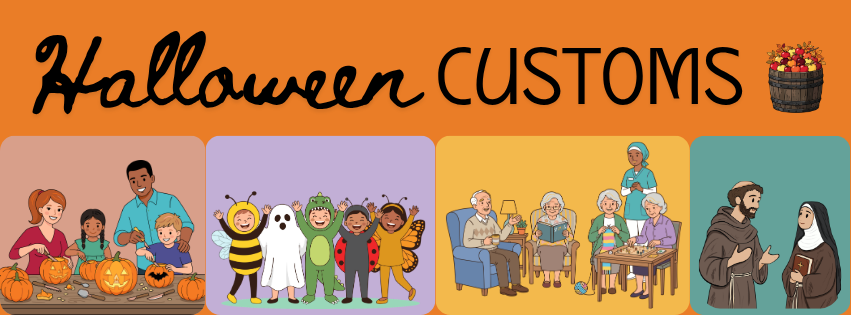
Halloween Customs
If your family would like to celebrate Halloween, here are some suggestions, along with some trivia:
The customs of Halloween are a mixture of Catholic popular devotions, and French, Irish, and English customs all mixed together.
Carved Jack-o-lanterns come from the Irish, who originally carved turnips.
English Catholics initiated the custom of begging from door to door, which was a purer form of “trick-or-treating.” Children would go door to door begging their neighbors for a “Soul Cake”.
In turn, they would say a prayer for those neighbors’ dead saying:
“A Soul Cake, a Soul Cake, have mercy on all Christian souls for a soul cake!”Bobbing for apples on Halloween is an old Celtic custom.
The custom of dressing up comes from the French.
Customary foods for Halloween include cider, nuts,
popcorn, and apples – and are best eaten around a fire.Dressing up as a saint can be a springboard for learning about their lives and their special graces.
Saint costumes provide an opportunity to teach others about those who loved God so much.Incorporating the wearing of costumes into a visit to a nursing home is an act of charity – bringing a bit of joy to the elderly and lonely.
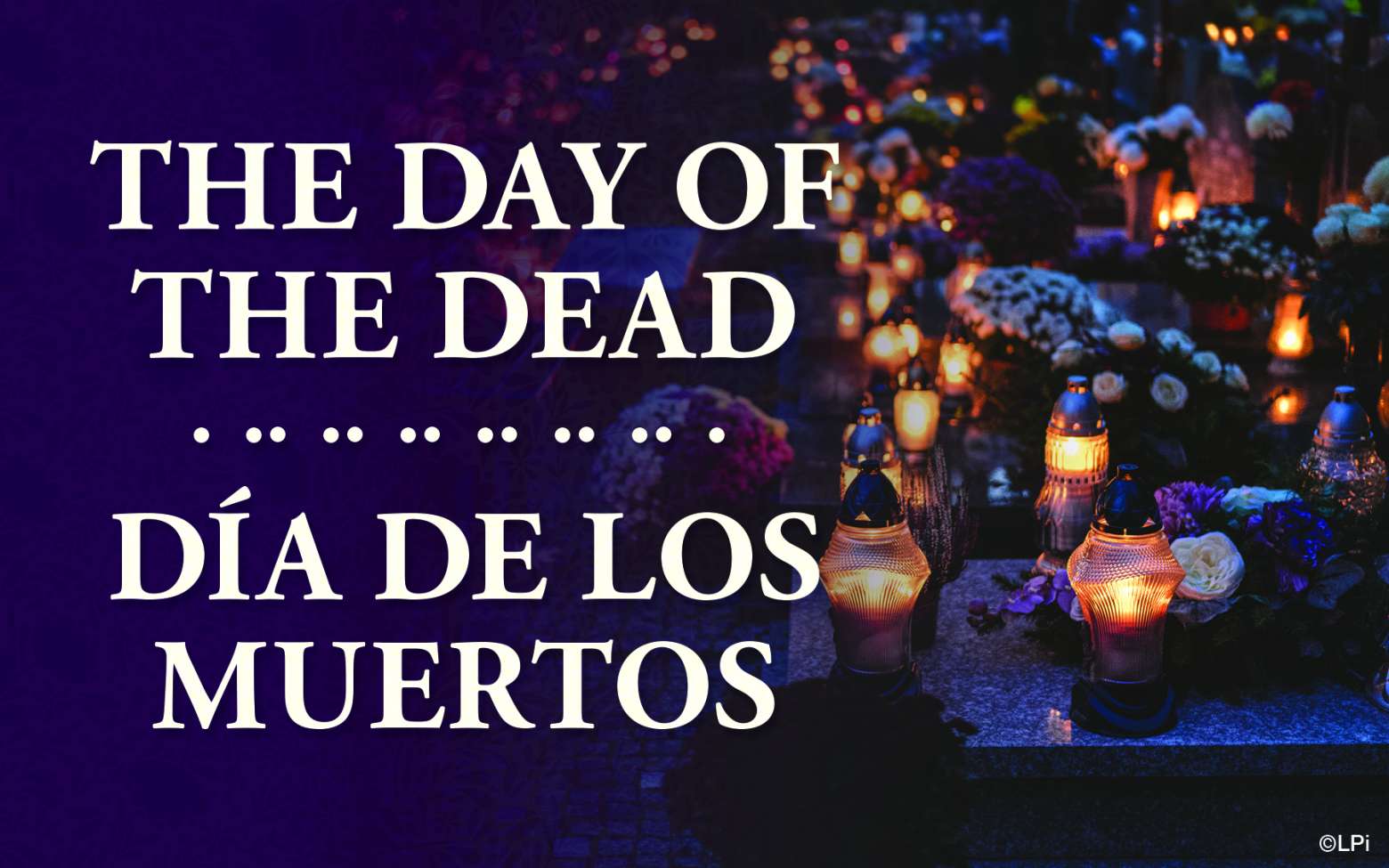
In Latin America, All Souls Day and All Saints Day are celebrated as Día de los Muertos (Day of the Dead). In addition to praying for deceased loved ones at Mass, this celebration includes making small altars (ofrendas) to honor the dead.
These altars have three levels:
The top level is decorated with imagery of the Faith (candles, religious imagery, prayers),
the middle level represents life on earth and includes photos of deceased loved ones and things they enjoyed in life,
and the bottom level symbolizes death and is a reminder of how life is short but the afterlife is eternal.
It is decorated with paper flags, skulls, and skeletons.
Hopefully, whatever your family decides, it’s vital to keep the facts straight, and to refrain from judging others who decide to celebrate Halloween differently or not at all.
As in all instances of our lives, charity is key.
(adapted from Halloween: Don’t Be Spooked, It’s Catholic, by Birgit Jones on Catholic Stand: A Little Vatican Apostolate at
https://catholicstand.com/halloween-dont-spooked-catholic/)

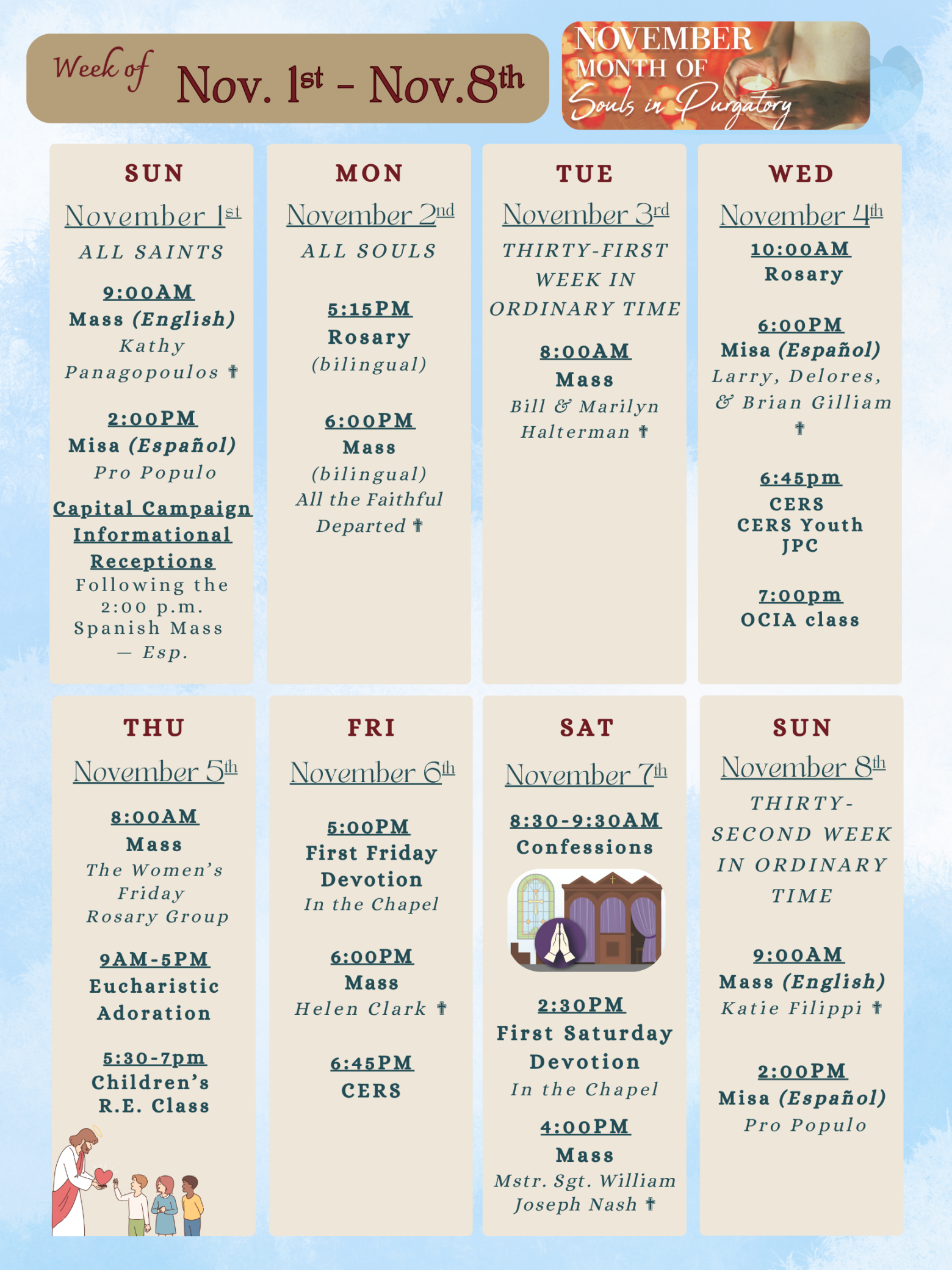
COME SEE THE FUTURE OF ST. MARY’S!
You’re Invited to a Capital Campaign
Informational Reception
Come learn more about our New Hall and Parish Center, view the project renderings and floor plans, hear about our $1.5 million campaign goal, and ask questions about the project and campaign.
Light refreshments will be served.
Location: St. Mary’s Church Narthex
Receptions Schedule
SUNDAY, November 1
Following the 2:00 p.m. Spanish Mass — Spanish
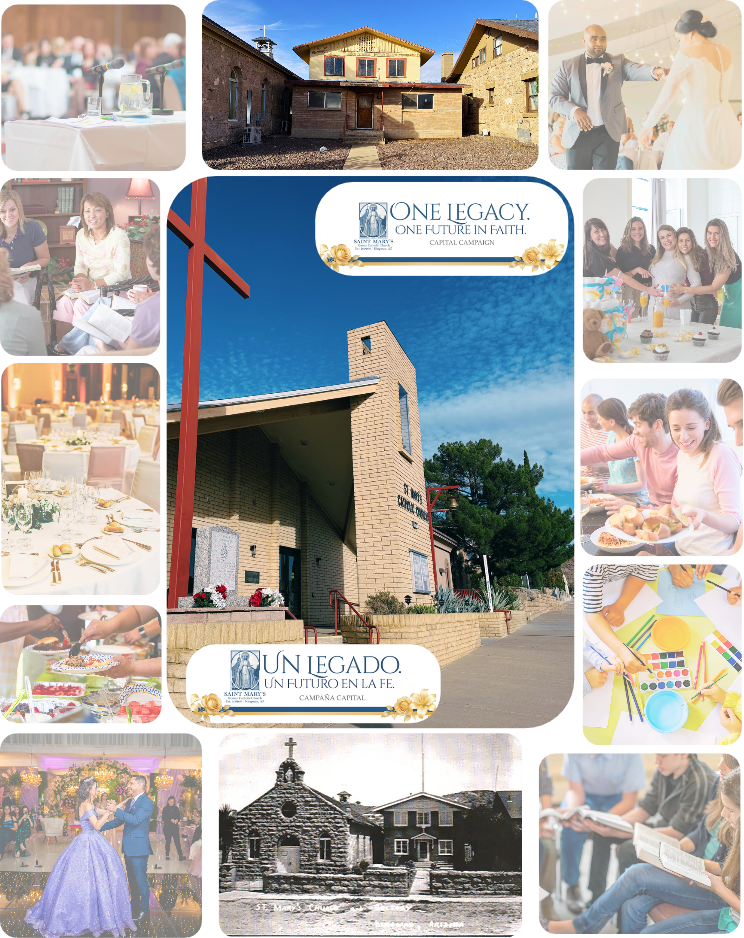
¡VEN A VER EL FUTURO DE ST. MARY'S!
Estás invitado a una campaña de recaudación de fondos recepción informativa.
Venga a conocer más sobre nuestro nuevo salón y centro parroquial, vea los planos y las representaciones del proyecto, infórmese sobre nuestra meta de recaudación de fondos de 1,5 millones de dólares y haga preguntas sobre el proyecto y la campaña. Se servirán refrigerios ligeros.
Ubicación: Nártex de la Iglesia de Santa María
Horario de recepciones
DOMINGO, 1 de noviembre
Después de la Misa en Español de las 2:00 pm — Español

National Vocation Awareness Week
National Vocation Awareness Week will be celebrated in our country November 1-7, 2026.
Please ask Our Lord for more dedicated, holy priests, deacons, and consecrated men and women. May they be inspired by Jesus Christ, supported by our faith community, and respond generously to God's gift of vocation.
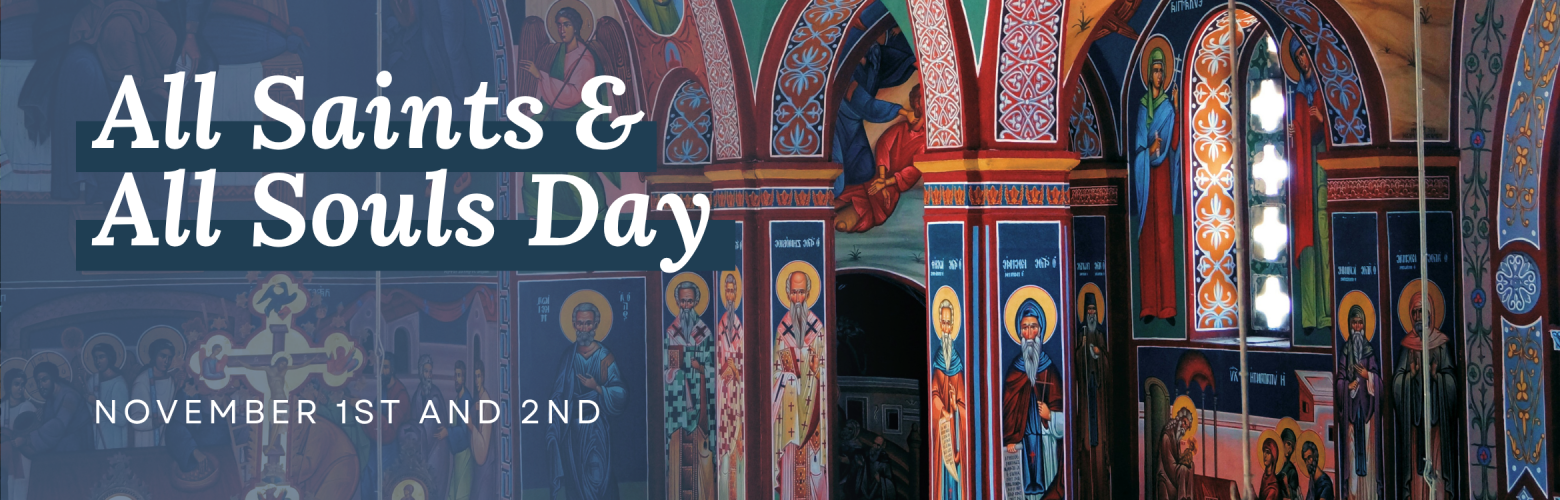
Dia de Los Muertos
St. Mary's will be celebrating Dia de Los Muertos
with a special Mass and rosary.
When: Monday, November 2nd
Rosary at 5:15pm (bilingual) - Mass at 6:00pm (bilingual)
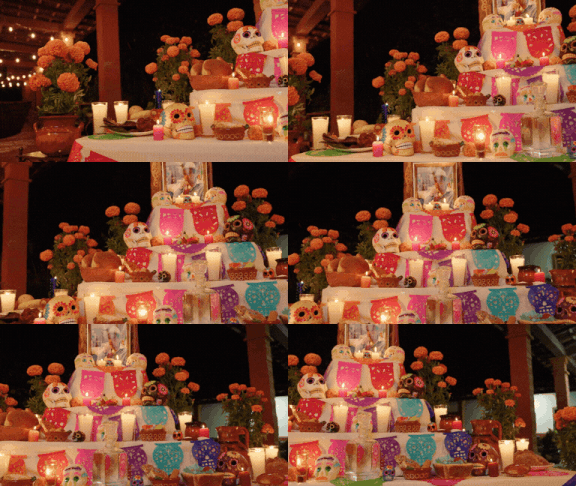
During Hallowtide weekend (10/31-11/02), there will be an ofrenda set up in the narthex for Día de Los Muertos (All Souls Day). Parishioners are invited to bring photos of their loved ones who have passed (8x10 inch or smaller) to place on the ofrenda. You may also bring a candle (battery-powered only), but please, no food or personal items.
Be sure to write your name on the back of the photo and the bottom of the candles so they can easily be returned to you the following weekend. Labels will be available for use.
Frames are available in the gift shop... while supplies last.
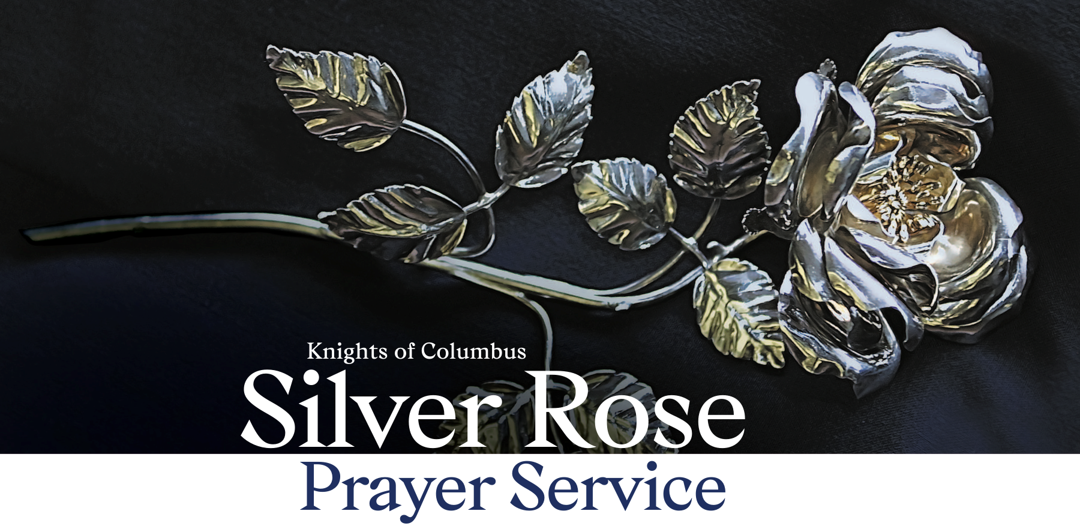
The Knights of Columbus Council 3145 presents to you the Silver Rose. The rose is making a Pilgrimage stop right here in our Parish.
The journey of the silver rose begins each year in March and ends on Dec. 12, the Feast of Our Lady of Guadalupe. During that time, Silver Roses travel from town to town along eight routes throughout North America. Several of those routes begin in Canada and end in Mexico.
The rose ends its pilgrimage at the Basilica of Our Lady of Guadalupe in Monterrey on Dec. 12, the Feast of Our Lady of Guadalupe. Today, due to the popularity of the program throughout the North American continent, eight silver roses travel unique routes.
LOCATION: St. Mary’s Catholic Church
DATE: November 2nd, 2026
TIME: 6:00 PM Mass
Baby Bottle Campaign!
October Baby Bottle campaign will be done end of October, please return the bottles!
If you are not ready, you can drop it off
at church office or gift shop.
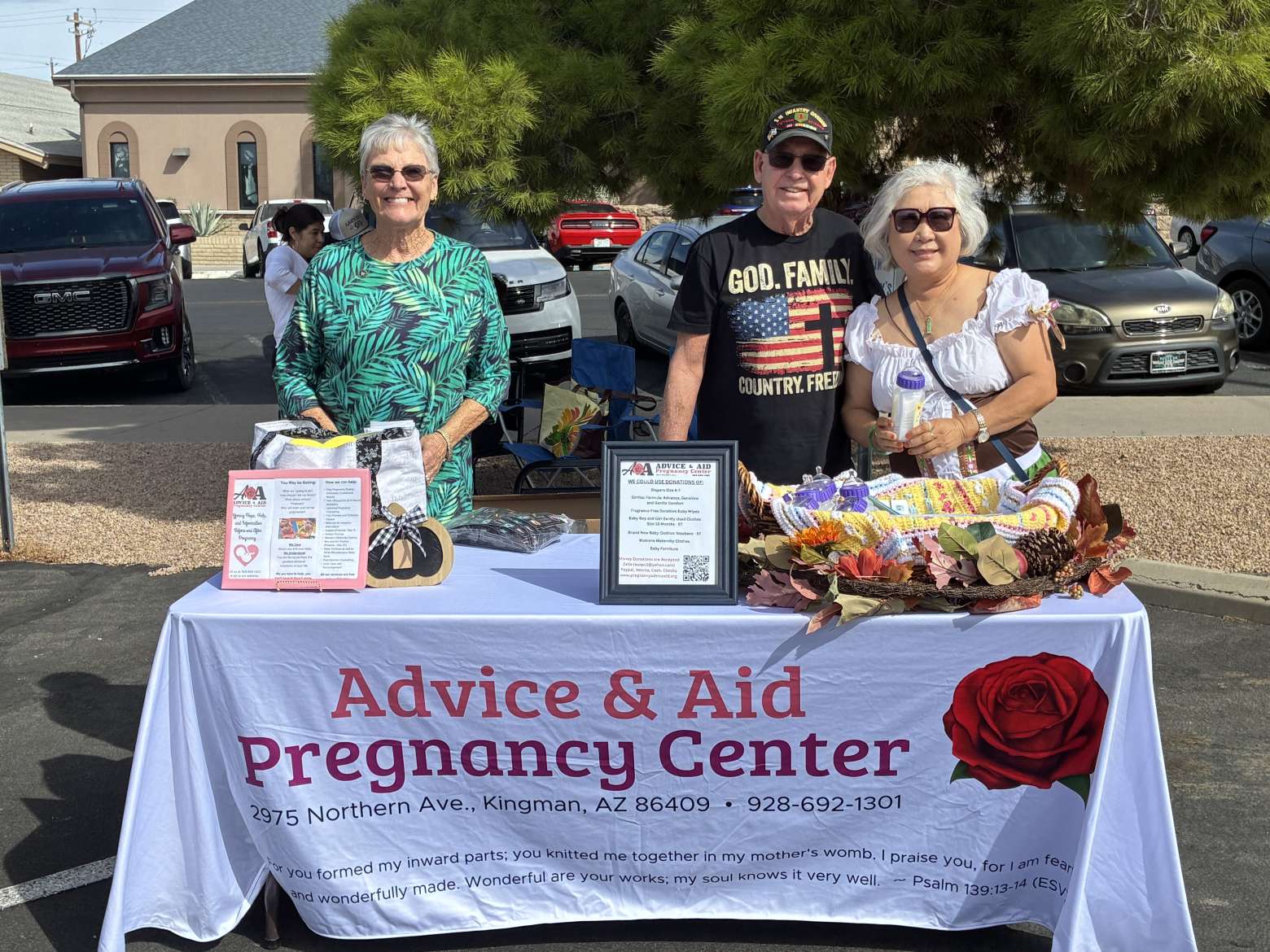
Thank you so much for your support,
may God bless you all!
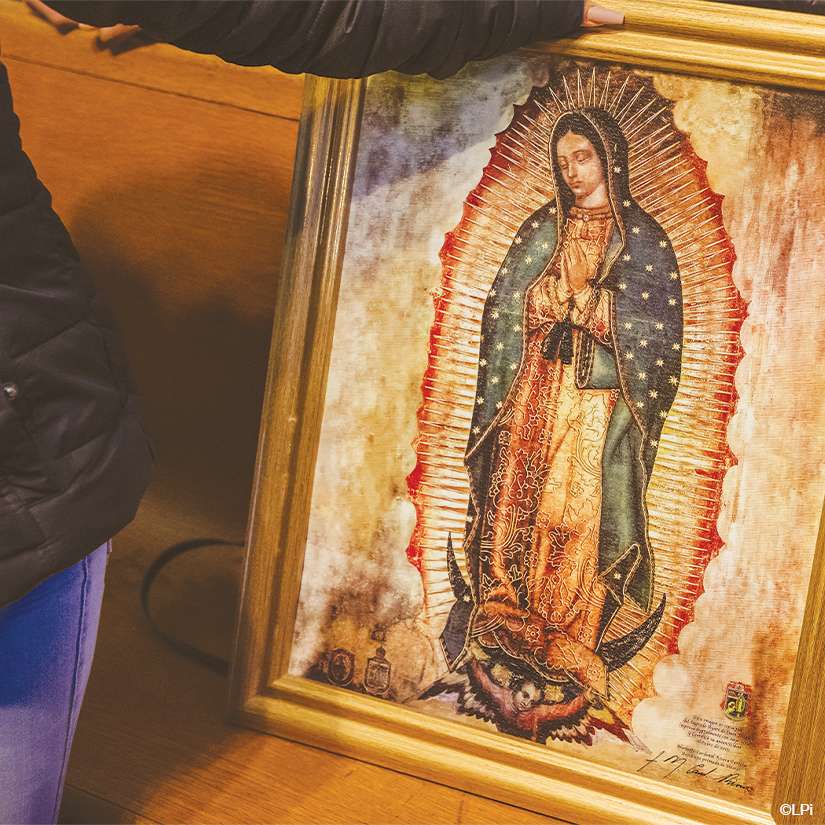
Acoge la imagen itinerante de Nuestra Señora de Guadalupe
Las familias de nuestra parroquia tienen la oportunidad de aumentar su devoción a Nuestra Señora de Guadalupe al tener una imagen de su tilma en sus hogares durante el mes de noviembre.
Las familias pueden inscribirse para exhibir la imagen en la tienda de regalos parroquial, antes y después de las misas de fin de semana durante el mes de octubre.
--------------------
Host the Traveling Image of Our Lady of Guadalupe
Our parish families have the opportunity to increase theirdevotion to Our Lady of Guadalupe by hosting an image of her tilma in their homes during the month of November.
Families can sign up to host the image in the parish gift shop, before and after the weekend Masses during the month of October.
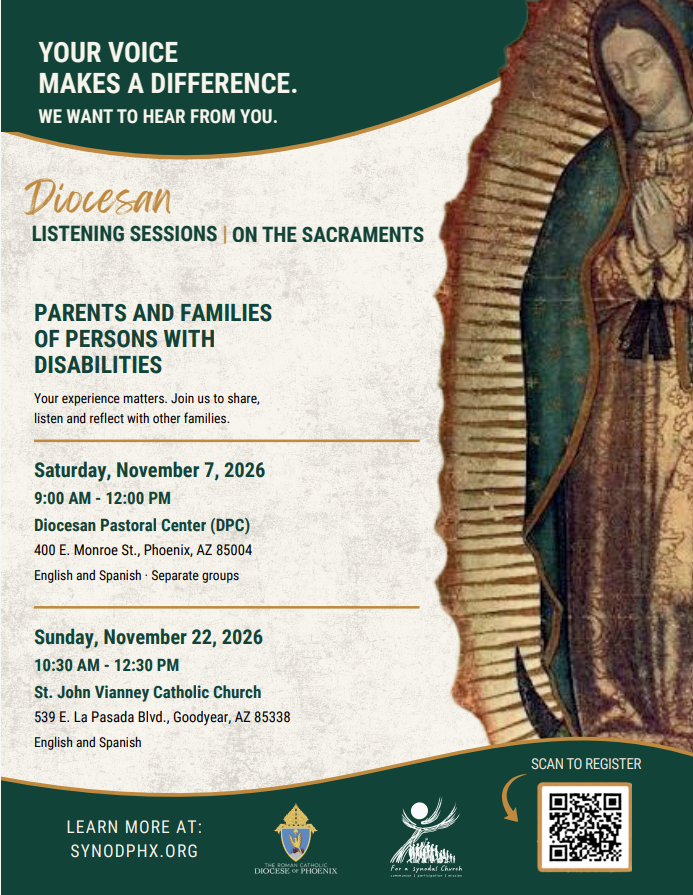
Listening Session for Parents and Families of Persons with Disabilities (bilingual)
As part of TILMA — El Camino Real, Bishop John Dolan invites parents and family members of persons with disabilities to share their voice about the Sacraments. This is a time of walking together, listening to your experiences — the joys as well as the struggles — so that together we can help every person encounter Christ. Everyone is welcome; no one is excluded.
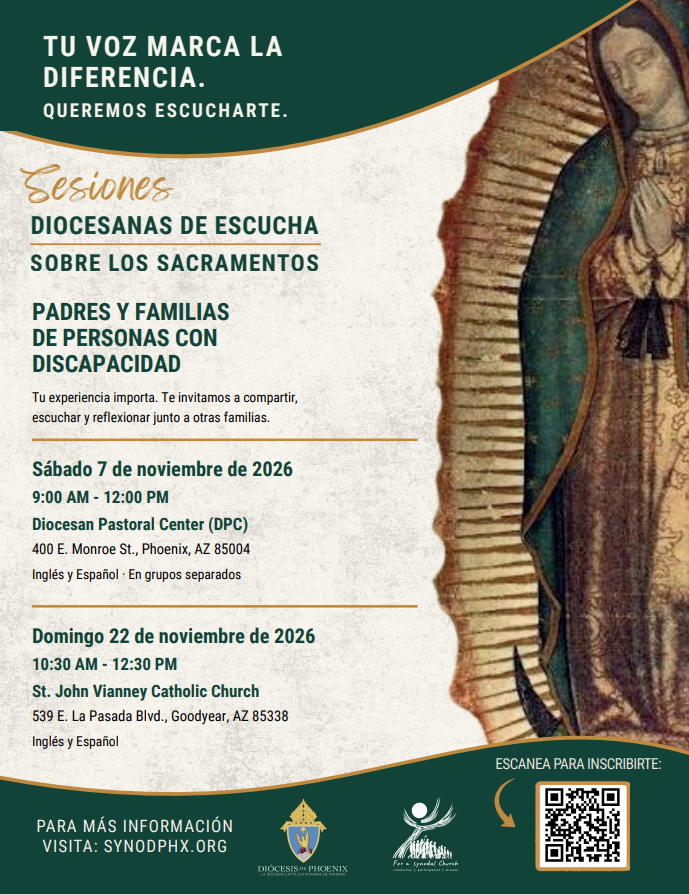
Sesión de escucha para padres y familias de personas con discapacidad (bilingüe)
Como parte de TILMA — El Camino Real, el obispo John Dolan invita a los padres y familiares de personas con discapacidad a compartir sus opiniones sobre los sacramentos. Es un momento para caminar juntos y escuchar sus experiencias —tanto las alegrías como las dificultades—, de modo que, unidos, podamos ayudar a cada persona a encontrarse con Cristo. Todos son bienvenidos; nadie queda excluido.

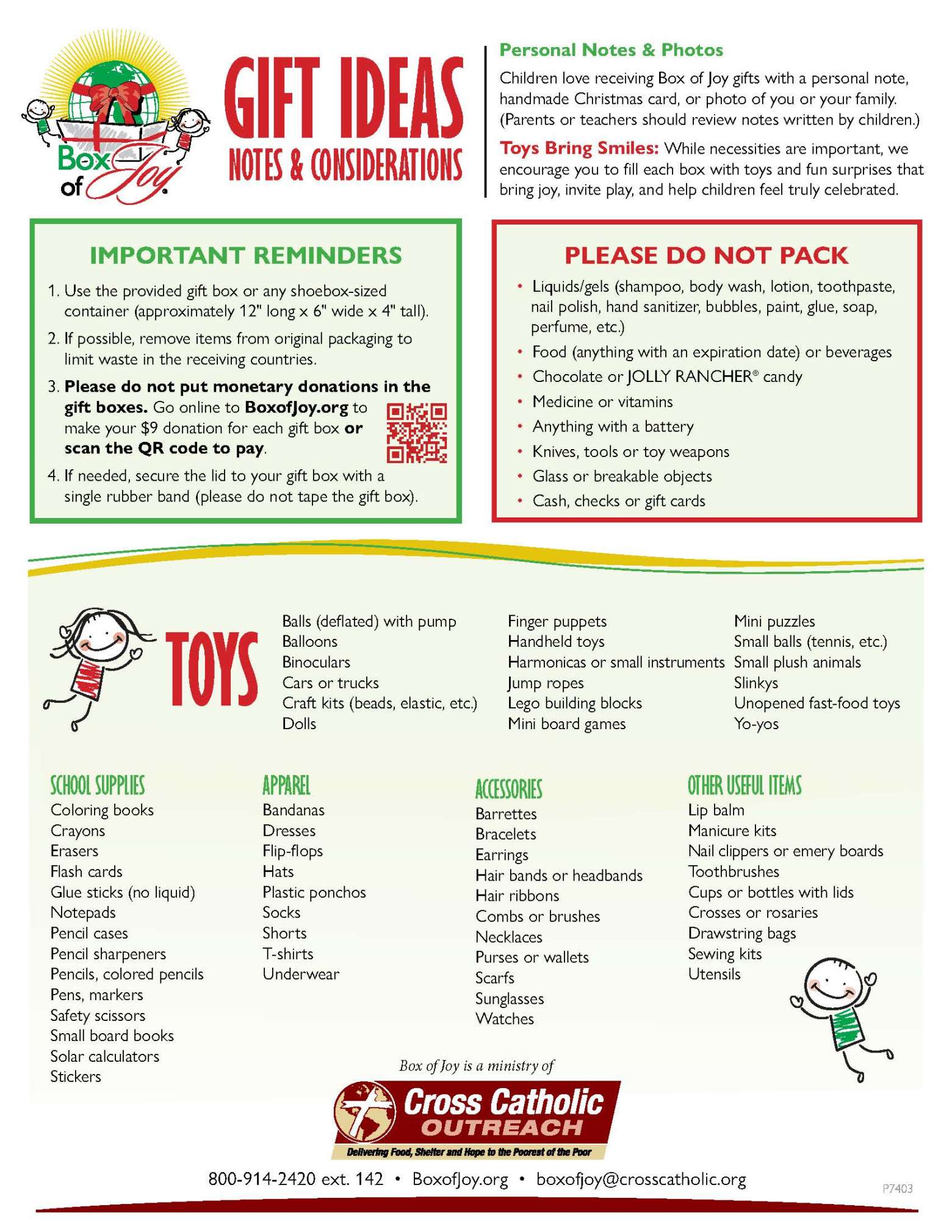
Box of Joy
Box of joy Is a wonderful opportunity to share God’s love with children and need around the world by filling a small box with toys, school supplies, and other thoughtful gifts.
We can bring happiness, hope and love to them this Christmas!
There is a $9 donation for each box to help cover shipping cost.
Boxes will be collected at all Masses on November 7th and 8th.
And let’s bring joy to the world.
St. Vincent de Paul
St. Vincent de Paul will be holding
a FALL FOOD DRIVE in early November.
Volunteers will be distributing empty grocery bags November 7/8 to be returned November 14/15.
Items most needed are:
Canned meats, vegetables and pasta sauce.
Specialty items for Thanksgiving dinners are also welcome.
Your generosity helps us provide food to our neighbors in need for the Thanksgiving holiday and beyond.
Come join our adult OCIA class!
Classes meet weekly on Wednesdays from 7-8:30pm. We will be meeting in Rooms 5, 6, & 7 in the parish hall.
Enroll by filling out the OCIA application, which can be picked up in the parish office or the Gift Shop. Enrollees must be registered to the parish.
The workbook is $25 and can be paid
by cash or check.
Make checks out to: St. Mary’s / memo: OCIA
LUKE: THE STORY OF SALVATION FULFILLED
Come one and all to start your journey for a deeper prayer life and see how the Holy Spirit is working in your life, just as he did in the life of Jesus.
You will experience joy as you see how God has been faithful throughout the ages and how God’s promise can guide you in your everyday life.
We begin on Tuesday, September 8 at 10 am in the Parish Center.
There will be a video presentation each class with Jeff Cavins and Dr. Jeffrey Morrow.
You can obtain the workbook on the
Ascensionpress.com site.
If you order yourself, you can also obtain the video
online if you are unable to attend a class.
If you have any questions or concerns,
please contact grace.mcnair@gmail.com

St. Mary Women's Fellowship
- For women 18 years and up
Our Fall Study program:
"Oremus: A Guide to Catholic Prayer,"
an 8-session study that teaches the essential steps of a faithful and fruitful prayer life.
You will pray with Scripture, listen for God's voice in daily life, overcome distractions, and learn to build a consistent prayer life.
Meeting dates and times:
We meet at 5:45 PM on
the 2nd & 4th Tuesdays of the month
(except for December)
in the Parish Center Library
Ordering workbooks: This year we will order as a group to save on the shipping cost. The more workbooks ordered the more discount we all receive. For more information, please email Rina:
caterinar1986@gmail.com
Schedule for the rest of 2026:
October 13
October 27
November 10
November 24 (possibly might change to the 23rd)
December 1
December 15
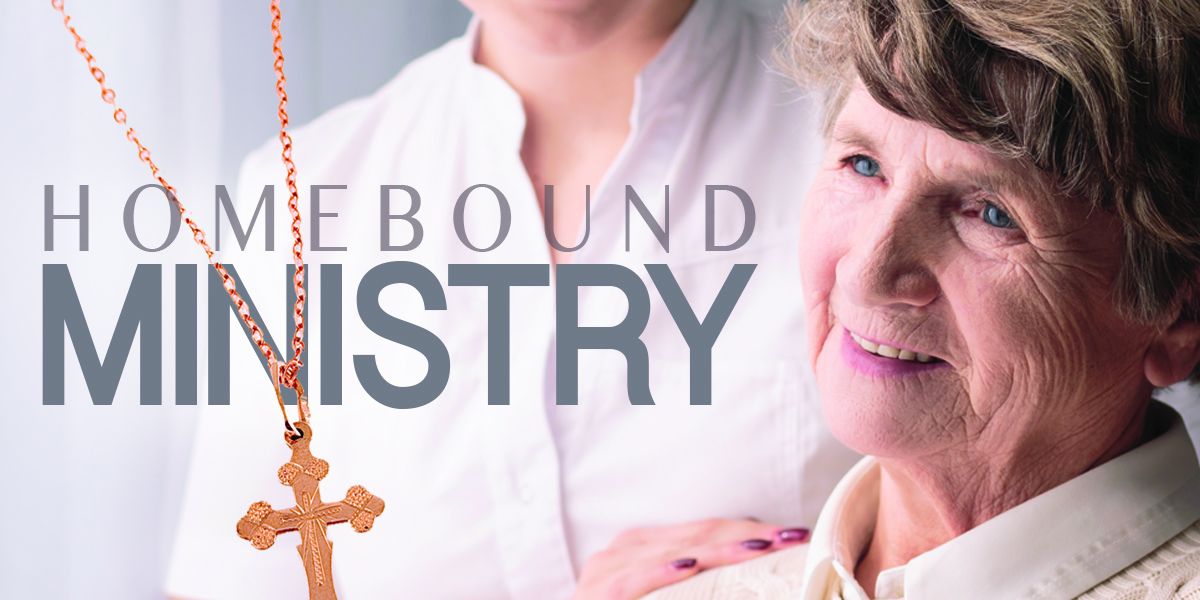
Homebound Ministry
To receive communion by the homebound ministry, please contact the Parish Office:
frontdesk@stmarykingman.com

Thank you to all scheduled adoration adorers, for your dedication in committing to an hour of Eucharistic Adoration each Thursday in St. Mary's Chapel.
If not a scheduled adorer, please consider becoming one.
This means committing to spending a scheduled hour each Thursday in prayer and Adoration between the hours of 9am and 5pm. We especially need people to commit to the 11am and 2pm hours.
Also, we need substitutes for those who cannot adore during their scheduled time.
Join us in prayer during Thursday Exposition of the Blessed Sacrament, even if not scheduled.
To sign up or get more info: Call or text Sharon Rhizor at 702-466-3069

